

Friday, April 5, 2024
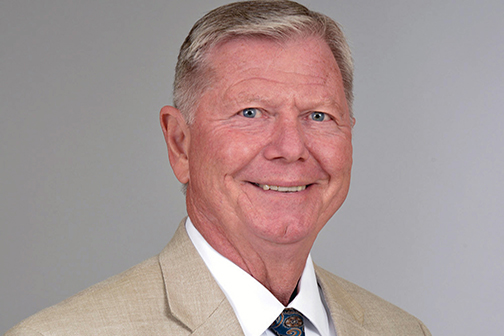
Dr. Gremillion was a long-time faculty member at UFCD having joined the college in 1991 in the Department of Prosthodontics. He later served as on faculty in the Department of Orthodontics and was named director of the Parker E. Mahan Facial Pain Center in 1992. He became a full professor in 2005 was named the Parker E. Mahan Endowed Professor in Orofacial Pain in 2008.
Gremillion was a Louisiana native who graduated in 1977 from the LSU Health New Orleans School of Dentistry and went on to become a leader in oral health at the local, state and national levels. His many honors include LSU Health New Orleans School of Dentistry Alumnus of Year in 2001, the school’s highest alumnus award, and the UF College of Dentistry Teacher of the Year in 2002 and 2007. A beloved educator, the Florida Dental Association honored him as the Florida Dental Educator of the Year in 2002 and 2006. He received the Louisiana Academy of General Dentistry Career Service Award in 2003. He was selected as a 2007 Distinguished Professor by the University of Florida Blue Key Society.
In 2008, the American Academy of General Dentistry honored Gremillion with the prestigious Theodore V. Weclew award for contributions to the education of general dentists. In 2009, the Dawson Academy honored him with its Career Service Award. In 2010, he received the American Academy of Orofacial Pain Service Award, and in 2015, the Pierre Fauchard Gold Medal. He was a member of the American Dental Association, Louisiana Dental Association, Academy of General Dentistry, Omicron Kappa Upsilon Honorary Dental Fraternity, American Academy of Orofacial Pain, American Pain Society, International Association for the Study of Pain, American Equilibration Society, American Association for Dental Research and International Association for Dental Research.
Keynote Speaker

Clinical Associate Professor
Texas A&M School of Dentistry
Dr. Bender is a Clinical Associate Professor at Texas A&M School of Dentistry in Dallas Texas and serves as the director of the Clinical Center for Facial Pain and Sleep Medicine, Texas A&M Health, Dallas, TX. He is a Diplomate of the American Board of Orofacial Pain and has earned Fellowships in the American Academy of Orofacial Pain, the American Headache Society, the International Academy of Oral Oncology and the American College of Dentists. He earned his Doctor of Dental Surgery degree from Baylor College of Dentistry in Dallas, Texas in 1986 and practiced general and restorative dentistry in Plano, TX for 12 years. From 1998-2000, he studied orofacial pain and temporomandibular disorders at the Parker E Mahan Facial Pain Center at the University of Florida College of Dentistry, Gainesville Florida.
From 2000-2015, Dr. Bender maintained a private practice limited to orofacial pain and sleep disorders before becoming a full-time faculty member at the School of Dentistry in 2016. He is a past president of the American Academy of Orofacial Pain as well as the Fourth District Dental Society of Texas and the Dallas Academy of General Dentistry.
Dr. Bender has authored and coauthored numerous articles and book chapters and has lectured nationally, and internationally on the topics of headache, TMD, facial pains, pharmacology, anatomy, and sleep topics. Dr. Bender also regularly mentors post graduate students during their research projects and dissertation preparation at the School of Dentistry.
Description
The Many Faces of Orofacial Pain: From Triage to Treatment
The primary reason individuals seek care from their health care providers is for pain. Pain in the head and face can often be confounding to the dental team if pathology is not obvious. This course will provide the practitioner with an overview of the varied orofacial pain conditions that include temporomandibular disorders (TMDs) as well as pains that may be less clear in etiology. These other conditions affecting the orofacial region may include trigeminal neuralgia, primary headaches, burning mouth disorder, and other related syndromes. Through the understanding of orofacial pain classifications and evidence-based approaches to diagnosis and therapy, attendees will gain the confidence and expertise to more accurately diagnose and, in some cases, effectively manage diverse orofacial pain presentations.
Objectives
By attending this symposium, the participants will be better able to:
- More confidently diagnose orofacial pain presentations.
- Systematically gather a relevant history and perform an appropriate examination including the ordering of appropriate diagnostic tests for orofacial pain conditions.
- Develop patient-centered treatment strategies for various orofacial pain presentations by incorporating multimodal and multidisciplinary approaches, pharmacological interventions, and in some cases, appropriate referral to most effectively alleviate suffering and improve the quality of life for individuals experiencing orofacial pains.
Agenda
| Time | Topic |
|---|---|
| 08:30 – 09:00 | Registration |
| 09:00 – 10:30 | Lecture |
| 10:30 – 10:45 | Break |
| 10:45 – 12:15 | Lecture |
| 12:15 – 1:15 | Lunch |
| 01:15 – 02:45 | Lecture |
| 02:45 – 3:00 | Break |
| 03:00 – 04:30 | Lecture |
Registration Information
Dr. Henry A. Gremillion Memorial Symposium
FRIDAY, April 5, 2024
9:00AM – 4:30PM
Breakfast & Lunch Provided
6 CEU Lecture
Dentists: $349
Auxiliary: $99
Location & Contact
UF College of Dentistry
1395 Center Drive
Gainesville, FL 32610
352-273-8480
admin-cde@dental.ufl.edu